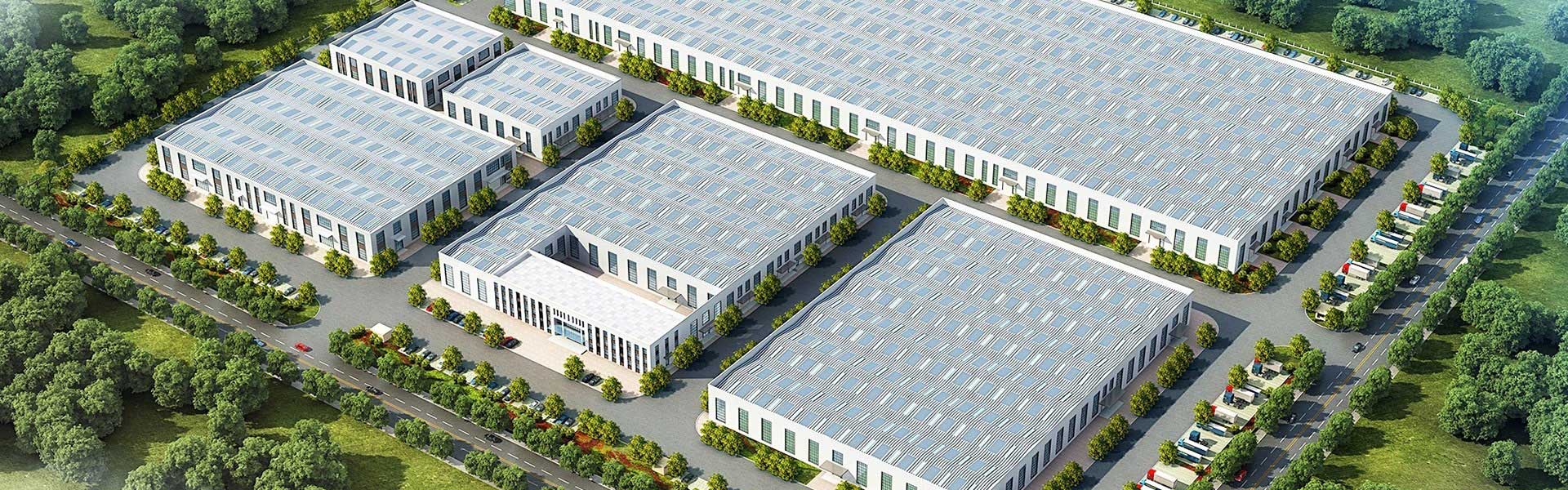
Large industrial generators are large-scale equipment used to convert mechanical energy into electrical energy, primarily serving industrial facilities, large buildings, mines, data centers, and other areas with high power demand.
I. Characteristics of Large Industrial Generators
Large industrial generators have high power and strong reliability, support continuous operation, and are compatible with various energy sources such as diesel and natural gas. They are used as primary or backup power supplies in factories, infrastructure, and other critical locations.
II. Large Industrial Generator Manufacturers
Huaquan Company was established in 2010. The company's industries cover power generation equipment, new energy storage equipment, high and low voltage complete sets of equipment, and power engineering, among other fields. It has developed three major brands: "HQ-POWER," "HUAQUAN," and "Huaquan." At present, the company has grown into a strong brand in the global power industry, with cumulative global sales exceeding 1 million units.
III. Advantages of Large Industrial Generators
1. Reliability and Availability
- Robust Design: Large industrial generators are designed for harsh environments and continuous operation, resulting in low failure rates.
- Quick Response: They can automatically start and take on full load within seconds after a grid failure, ensuring uninterrupted production processes and critical operations.
2. Strong Power Output and Load Capacity
- Wide Power Range: Large industrial generators can meet all or most of the power needs of factories, data centers, and large facilities.
- Handling Impact Loads: They can stably cope with instantaneous high current surges caused by starting large motors, maintaining voltage and frequency stability.
3. Flexibility
- Flexible Deployment: Large industrial generators can serve as primary power, backup power, or peak-shaving power, and can be fixed or mobile, suitable for weak grid or off-grid areas.
4. Controllability and Independence
- Autonomous Control: Users have full control over their power supply, unaffected directly by public grid outages, supply restrictions, or price fluctuations.
- Support for Grid-Connected/Island Operation: They can seamlessly connect to the grid or operate independently in island mode, providing stable support for microgrids.
IV. Operating Precautions for Large Industrial Generators
1. Real-time Monitoring of Key Parameters for Large Industrial Generators:
- Instrument Readings: Closely monitor engine oil pressure, coolant temperature, voltage, frequency, current, and exhaust temperature to ensure they remain within normal ranges.
- Status of the "Three Filters": Regularly check the air filter, oil filter, and fuel filter, cleaning or replacing them as needed.
2. Fluid Management for Large Industrial Generators:
- Oil Level and Quality: Regularly check the levels and quality of engine oil, coolant, and fuel. Replace oil and filters according to the prescribed schedule.
- Fuel System: Ensure the fuel is clean and periodically drain water from the bottom of the fuel tank to prevent microbial growth.
3. Electrical System Inspection:
- Check that all electrical connections on the large industrial generator are secure and show no signs of overheating, corrosion, or looseness.
- Keep the battery bank adequately charged and the terminals clean and tightly connected.
4. Ventilation and Cooling:
- Ensure the generator room is well-ventilated, intake and exhaust vents are unobstructed, and radiator (cooling) fins are clean to prevent power loss or shutdown due to overheating.
V. Q&A on Knowledge Related to Large Industrial Generators
1. What is grid-connected operation of a large industrial generator?
After synchronizing with the mains power grid, the generator runs in parallel to help with peak load regulation or to supplement power supply, requiring specialized synchronization equipment.
2. Key factors to consider when selecting a large industrial generator?
Load requirements, fuel availability, environmental regulations, backup power switching time, and total lifecycle cost.
3. Main noise and emission control for large industrial generators?
Install soundproof enclosures and mufflers; reduce emissions such as nitrogen oxides through exhaust treatment systems (e.g., SCR).
VI. Application Areas of Large Industrial Generators
1. Industrial Manufacturing: Large industrial generators serve as the main or backup power source for factories and mines, ensuring continuous production.
2. Critical Facilities: Emergency power for data centers, hospitals, and airports to guarantee uninterrupted operation.
3. Energy Development: Large industrial generators provide off-grid power for oil fields and offshore platforms.
4. Municipal Infrastructure: Grid peak shaving, regional power supply, and disaster emergency response.
5. Large Events: Temporary high-power supply for sports events and performances.
The core value of large industrial generators lies in providing reliable, immediate, and high-capacity power for situations where power cannot be interrupted. Users should choose the appropriate large industrial generator according to specific operational needs.
More information about large industrial generators: http://www.wffadianji.com/
Sales hotline: +86 15905360672
WeChat customer service: +86 15905360672
Email address: huaquan@huaquanpower.com
Official website: https://www.huaquanpower.com
Production Base: No. 11666 Guting Street, Economic Development Zone, Weifang City, Shandong Province
Company Name:SHANDONG HUAQUAN POWER CO.,LTD